The Best Loan Approval Letter
Myrtle Beach, SC
Be prepared to lose the house. A basic pre-qualification simply is not enough.
If you are like most home buyers, you will put off getting a loan approval. You know that you will easily qualify, so you plan to select your loan product and mortgage company once you're ready to make an offer. When you find the perfect home, you'll simply make a phone call to a lender, get a loan approval letter, and get the home under contract. What could be easier?
When you present a purchase offer, you must prove that you have the means to purchase the home. The basic loan pre-qualification is superficial and simply isn't enough. Do all of your homework upfront, get the very best loan approval letter, and get the house.
Three Levels of Loan Letter
Not every letter carries the same weight, and a listing agent knows the difference on sight.
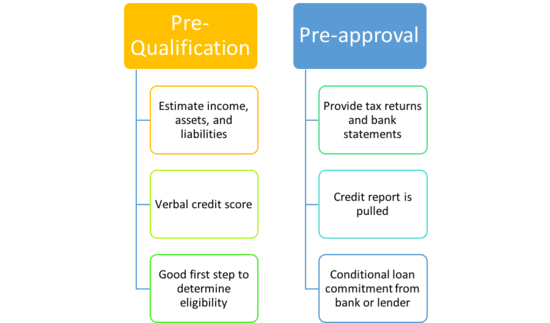
Pre-Qualification
A conversation. The lender takes your word on income, debts and assets, and verifies nothing. Quick to get, and worth correspondingly little in a negotiation.
Pre-Approval
The lender pulls your credit and reviews some documentation. Stronger, and what most buyers present, but the file has not been through underwriting.
Underwritten Approval
A full application, verified employment, bank statements, tax returns, and an underwriter's approval. Close to cash in the seller's eyes.
Shop Around First
Shop around for loan products and speak to loan officers first. See this primer to understand common programs and strategies.
A loan officer will pull your credit, review income and will advise on the best programs for you. Now is the time to resolve issues on your credit report so you can get the lowest rate on your loan.
Choosing a Loan Officer
All loan officers are not the same. Getting through the loan process can be exhausting and painful, so you ideally want a local, experienced loan officer. Your loan officer will have great rates and will be responsive throughout the entire process.
Also, expect that the seller's real estate agent will call your loan officer when evaluating your purchase offer. An 800 number for an out-of-state agent will not give the seller confidence that your loan will be funded without delays or issues.
That call is worth thinking about. When two offers are close, the seller's agent is weighing which one is most likely to actually close, and a loan officer who answers the phone and knows the file is a genuine advantage.
There is one advantage in particular worth asking about: many local lenders underwrite in house. That means the underwriter reviewing your file works in the same building as your loan officer, rather than sitting in a processing center several states away.
The practical difference is speed and certainty. A question that would otherwise take days of emails gets answered by walking down the hall. Conditions get cleared faster, closing dates hold, and if something does come up late in the process there is a person who can actually make a decision. On a competitive offer, that is often the difference between closing on time and asking the seller for an extension.
Ask any lender you speak to whether underwriting is done in house. It is a short question and the answer tells you a great deal.
Make Full Loan Application
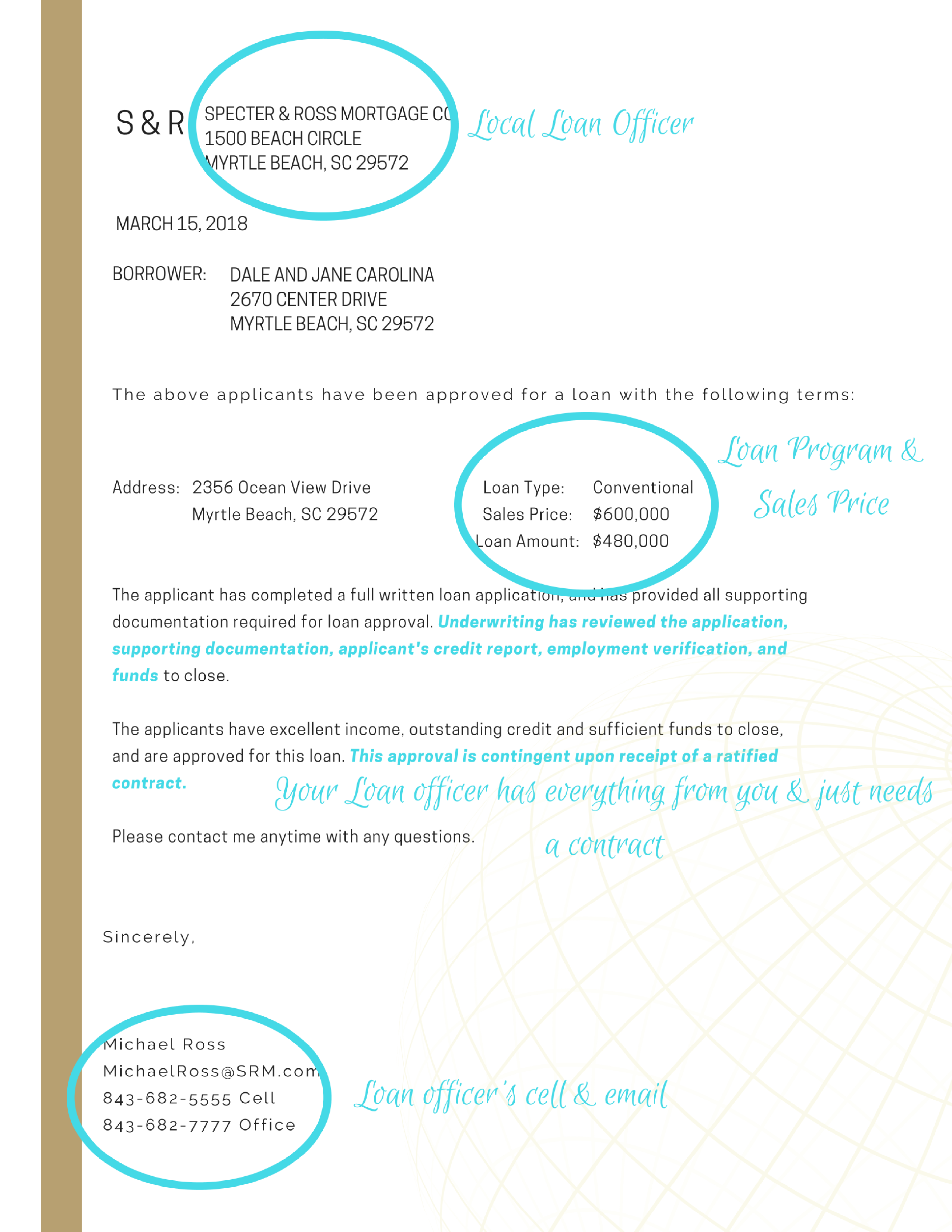
Now, even before you've found your dream home, commit to your loan officer and make full loan application. You'll fill out a detailed loan application, confirm employment, provide bank statements, and provide tax returns if required. Your loan processor will pass your application and all documentation to the underwriter for approval.
Now you have the very best loan approval letter you can get. It should look something like this:
Let Me Be Your Guide
A strong loan letter is one of the few advantages you can arrange entirely in advance, before you have even found a house. It costs nothing beyond the time, and in a competitive situation it is often what separates two otherwise similar offers — see winning against your competition.
Since I work with local lenders on a daily basis, I can point you to loan officers who write in this market regularly, answer their phones, and are known to the listing agents you will be negotiating against.
Let me be your guide to purchasing a home in Myrtle Beach. Please refer to my Buying a Home page for greater detail about my process of helping you purchase the perfect home at the best possible price.
Frequently Asked Questions
What is the difference between pre-qualification and pre-approval?
A pre-qualification is based on information you provide verbally, with nothing verified. A pre-approval means the lender has pulled your credit and reviewed documentation. A fully underwritten approval goes further still, with the file reviewed and approved by an underwriter before you make an offer.
Why does a stronger loan letter matter?
When you present an offer you must prove you can complete the purchase. A basic pre-qualification is superficial, and a listing agent knows it. A fully underwritten approval tells the seller your financing is unlikely to fail, which can matter as much as price.
Should I use a local loan officer?
It helps. The seller's agent will often call your loan officer when evaluating your offer, and an 800 number for an out-of-state lender does not give a seller confidence that the loan will fund without delays.
What is in-house underwriting and why does it matter?
It means the underwriter reviewing your loan works for the same local lender as your loan officer, rather than in a remote processing center. Questions get resolved in person instead of by email, conditions clear faster and closing dates are more likely to hold. Ask any lender you speak to whether underwriting is done in house.
Can I get approved before finding a house?
Yes, and you should. Making a full loan application before you find the home means the underwriting work is already done when you are ready to offer, and you are not asking a lender to rush.
When should I check my credit report?
At the start, before speaking to lenders about specific programs. It is not uncommon for a report to carry one or two small items which, if resolved, noticeably improve your score and therefore your rate.
Let's work together.
Want an introduction to a local loan officer who will actually answer the phone? Ashley DeLong works with them daily.
Contact Me! Call AshleySign Up For An Account Today!
Get access to real-time updates as listings hit the market by signing up now. By signing up early in the process, you maximize your chances of landing your ideal home, condo, or villa. Your account enables you to:
- Save searches based on your criteria.
- Receive market updates and price drops.
- Create custom predictive market reports.


